Startup To Watch: Timelaps Is Bringing Always-On Brand Tracking to Marketing Teams
ATLANTA, August 20 (Hypepotamus) - It’s 2026. Is your brand marketing working?
Brand tracking — the research used to understand how consumers perceive, know and choose a brand over time — is a multi-billion dollar category within the $56 billion global market research industry.
But traditional brand tracking is expensive and slow, even for sophisticated brands and large consumer-facing enterprises, says Atlanta-based entrepreneur Harry Zhang.
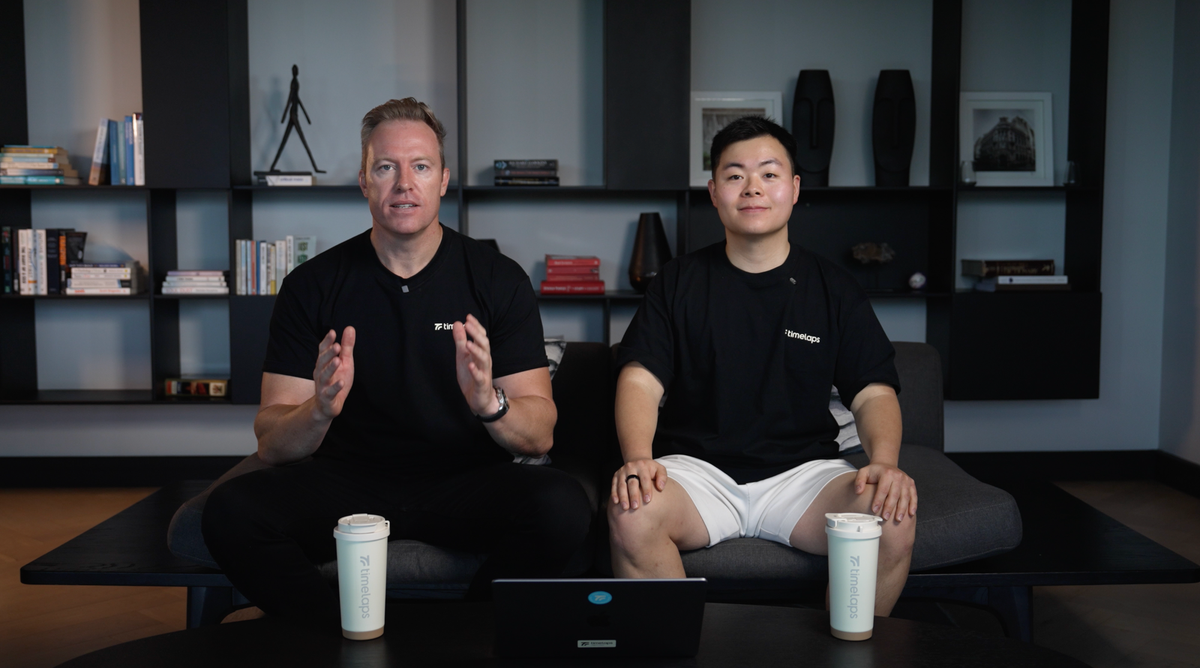
Alongside co-founder Henk Pretorius, Zhang is building Timelaps, an always-on brand tracking platform designed to make those insights faster and more accessible.

Make every text, call, and lead count. CallRail connects the dots between your campaigns, conversations, and customers.
The Problem The Brands Have
Traditionally, B2C (business-to-consumer) brand tracking largely followed an agency-driven process.
“You hired a market research agency (e.g., Kantar, Ipsos, Nielsen), waited three to six months, and got a PDF or PowerPoint,” Zhang told Hypepotamus. Scoping and questionnaire design took weeks of workshops before a single question went into the field. Fieldwork ran in waves, quarterly or biannually. You'd learn in October that something broke in July.”
And that entire process could end up costing a brand six figures per market, per year.
But Zhang argues the lag creates a deeper problem than inconvenience: attribution.
“If you field quarterly and you ran four campaigns in that quarter, the number moved, and you have no idea which one moved it. Waves destroy your ability to connect a marketing decision to a brand outcome.”
How Timelaps Works
Timelaps replaces research “waves” with an always-on system designed to get a company from signed contract to live fieldwork within days.
The goal is for Timelaps to slot into an existing marketing workflow rather than create another research process for teams to manage. Zhang said teams can use the platform to establish a baseline before a marketing campaign or measure impact of new creative or media hits.
The Timelaps process has four main components.
First comes study design. Timelaps' AI analyst works alongside a brand research expert to develop a questionnaire tailored to the customer's brand, category, competitive set, and markets. The client reviews and approves the questionnaire before it enters the field.
 Timelaps
“Traditionally, this is weeks of agency discovery workshops,” Zhang said.
Then comes the fieldwork. Rather than conducting research periodically, Timelaps continuously collects responses from census-matched category buyers using global and regional panels. The company can operate across 82 markets, with surveys conducted in respondents' local languages. Timelaps can provide “thousands of responses per brand per region per year, so subset data is still representative.”
Quality control is the third step. Every response is checked through fraud detection and Timelaps' own quality-control algorithm before being incorporated into results. Timelaps experts also validate and contextualize the findings, creating feedback that can further improve and customize the system for individual clients.
Finally, the results are added to a dashboard that refreshes monthly, not a stale document.
Timelaps uses AI to automate questionnaire construction, sampling and quota management, data cleaning, weighting, chart building, analysis, and storytelling. There is one area Zhang said the company intentionally did not automate: the underlying brand science.
That brand science comes from co-founder Pretorius, who spent 20 years designing trackers for some of the world's largest companies before building Timelaps.
“AI makes that methodology cheap to run but does not invent anything unproven,” Zhang added.
Keeping the Data Research-Grade
Automating more of the research process only works if the underlying responses remain credible, Zhang added.
Timelaps uses one of the largest global panel providers, supplementing it with regional providers in individual markets. Respondents are census-matched using characteristics including age, gender, ethnicity, household income, geography, and other demographics.
The company also screens respondents for category participation. Before respondents reach the questionnaire, they pass through third-party fraud and bot detection. Timelaps then applies its own quality-control algorithm to respondents.
“It catches speeding, straight-lining, internally inconsistent answers, gibberish in open-ends, and duplicates,” Zhang said. “Respondents who repeatedly fail get blacklisted.”
There is also a commercial mechanism behind those safeguards. Timelaps has refund agreements with panel providers when data does not meet quality standards.
“If quality fails, it costs them, not the client,” Zhang said. “That aligns everyone's incentives in a way that a quality promise in a contract doesn't. Importantly, poor quality never reaches the dashboard.”
Timelaps currently prices its Start plan at $15,000 and its Scale plan at $30,000 per region per year. Timelaps' pricing model is built around what Zhang describes as agency quality at software pricing.
“In market research, traditionally, pricing is quoted per project and negotiated behind a login, so nobody knows what anyone pays. At Timelaps, we want to be transparent and upfront about the pricing, so trust is built from day one,” he added.
Meet The Timelaps Team
Zhang and Pretorius met through the On Deck Fellowship in San Francisco in September 2025. Zhang, an Emory University graduate, previously co-founded HackQuest, a venture-backed Web3 startup that was acquired in 2025. Pretorius was the co-founder and CEO of Columinate, the leading digital research company in South Africa (acquired by InSites Consulting in 2018).
The two spent the following months validating different ideas, interviewing over 30 CMOs and executives at large companies. A pattern appeared around the need for more accessible, and more affordable, brand tracking.
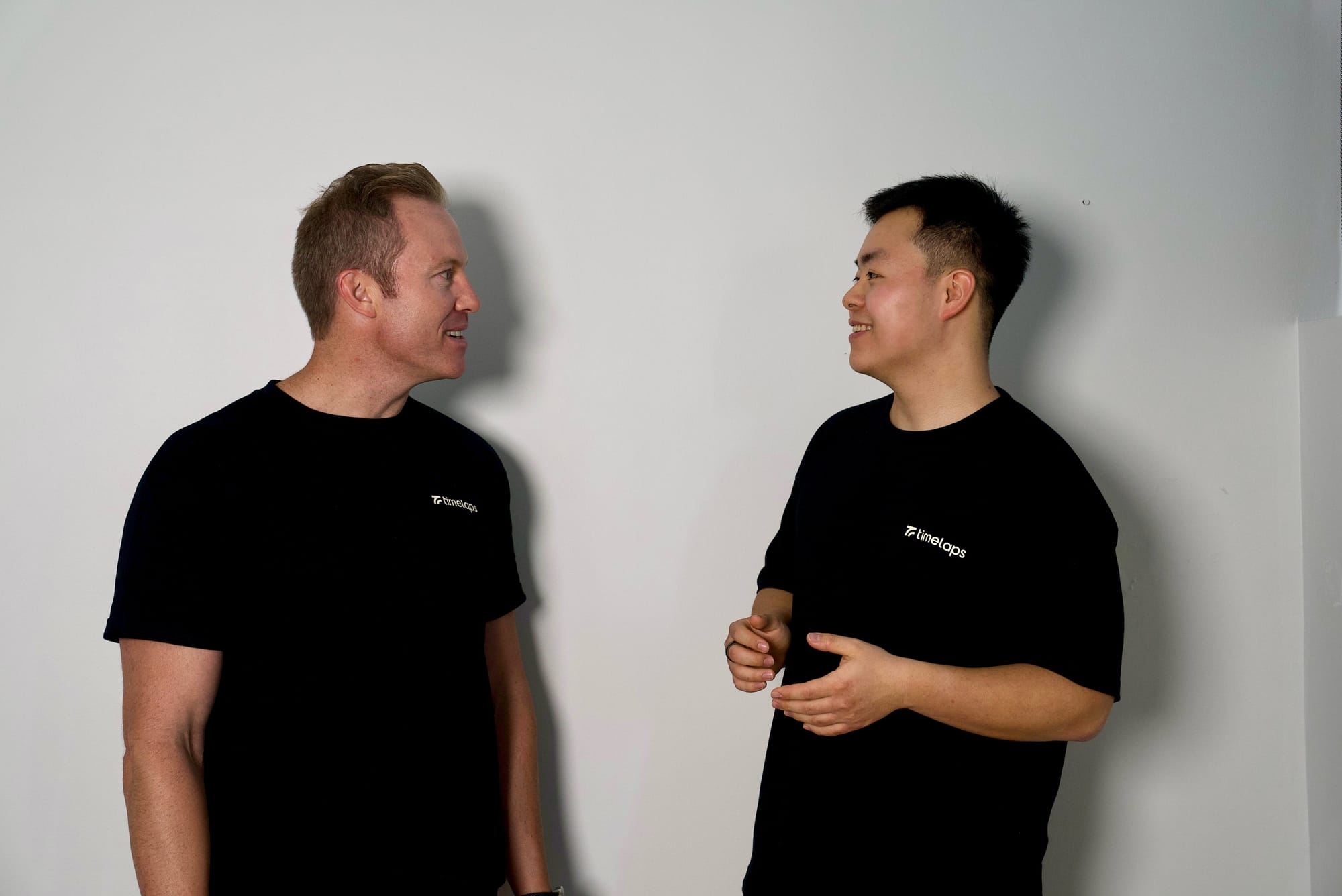
The team incorporated Timelaps in late March 2026 and went live with the platform this May.
Even in its early stages, Timelaps has put up some impressive numbers. They recorded $233,000 in ARR from auto-renewing contracts, and have brand tracking underway in six countries.
For Timelaps, the broader bet is that brand tracking doesn't need to become less rigorous to become faster and more affordable. Instead, Zhang and Pretorius are using AI to remove much of the manual work surrounding the research itself — and trying to turn something that historically arrived in a six-figure quarterly deck into an always-on part of a marketing team's workflow.
See more Hypepotamus stories in your search results