
Yum Arnold Built a Lasting Managed IT & Cybersecurity Company. Today, Her Impact Spans Atlanta's Business Scene.
The Leapfrog founder helped pioneer remote IT management while shaping institutions from Venture Atlanta to the Atlanta Fed.
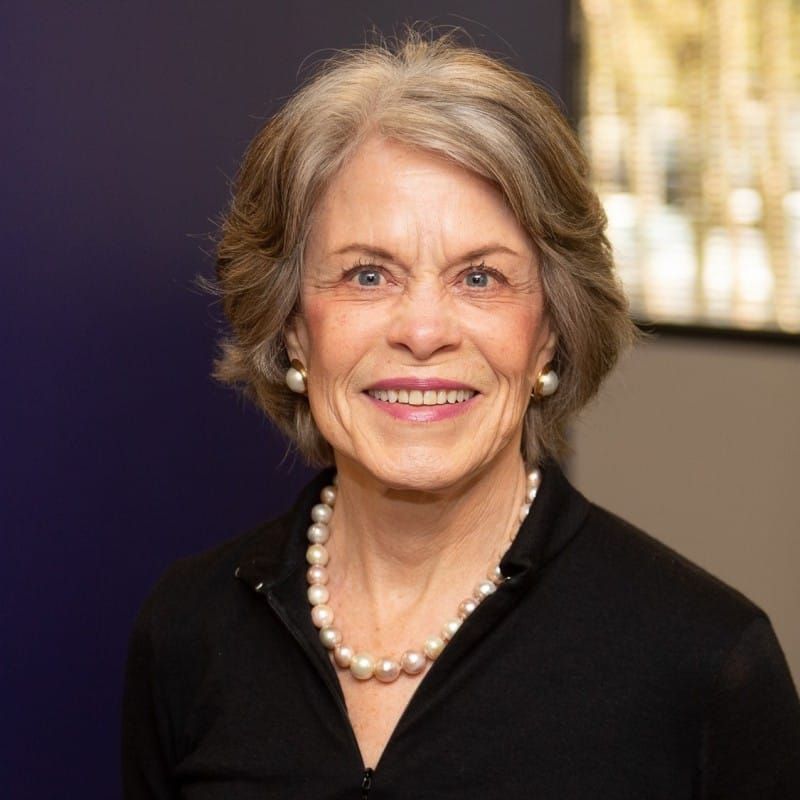
ATLANTA, November 16 (Hypepotamus) - Tech CEO. Mom. Board leader. Business whisperer. One of the most connected people in the Atlanta tech ecosystem.
Claire “Yum” Arnold has spent her career building businesses and helping guide the institutions that shape Atlanta. Her board service stretches from Spelman College and Venture Atlanta to the Federal Reserve Bank of Atlanta, where she served as chair.

Tech Square Ventures is an Atlanta-based firm investing in enterprise (B2B) and marketplace technology companies.
But her move into the tech world started after noticing a problem closer to home. Specifically, in the late 1990s, her husband’s small law office couldn’t find reliable IT support. Arnold saw an opening. With an initial founding partner she met through Leadership Atlanta, she started Leapfrog around her dining room table. The company became one of the earliest providers of remote IT management, helping businesses maintain their technology without keeping IT staff in every office.
Now Leapfrog’s executive chair, Arnold has built a career around finding gaps, bringing in people with the expertise to fill them, and giving them room to work. That approach has shaped both her company and her contributions across Atlanta’s business community.
The Small Business Problem Behind Leapfrog
Before building Leapfrog, Arnold started her career at the Coca-Cola Company, holding roles in marketing, sales, sales management, and long range planning, before acquiring a distribution company NCC. She scaled that to one of Georgia's five largest privately-held companies. After a successful exit, she was enjoying what she called the “fun stuff,” including organizing international meetings and serving on public boards.
Her family had other ideas.
“The kids and I have taken a vote, and you need to go back to work,” she recalled her husband telling her.
The idea for her next business came partly from watching his small law office struggle to find reliable IT support. As Arnold watched the tech woes impact the business, she saw a gap between what smaller businesses needed and what providers offered. Specifically, she saw how independent technicians could leave businesses waiting for help. Equipment resellers had started to add services, but, in her assessment, did not necessarily understand how to deliver them.
Arnold initially looked for a business to buy. When she could not find one, she and a founding partner she met through Leadership Atlanta started their own, which grew into Leapfrog.
Leapfrog began around Arnold’s dining room table, initially serving organizations with 25 users or fewer. Today, it targets businesses with 100 to a few thousand users, including companies with offices across the United States that cannot staff each location with the IT expertise they need. The company figured out early how to manage 95% of that work remotely, Arnold said. She described Leapfrog as one of the first two managed service providers in the country to offer remote management.
After launching in 1998, Leapfrog was soon putting clients’ servers in remote data centers rather than keeping them on-site, before the company called that approach “the cloud.”
Building A Business That Could Survive The Bust
Leapfrog launched during the dot-com boom, when she said early technology companies often started with an exit strategy in mind. But from the start, Arnold said she was was thinking about the customer.
“I really didn’t start this thinking about how I’m going to get out of it,” she said. “I started it to fill a void in the market.”
She added that her experience in the distribution space shaped how she built a tech-focused company, since she knew how to build with tight margins and without outside capital.
 Maija Ehlinger

A Training Ground For Atlanta Tech Talent
Arnold, who is now the company’s executive chair, says she is not a technologist. But she knows how to put together a tech team.
“My approach is to find really smart people who are experts in their field, and let them do it,” she said.
The company has fewer than 70 full-time employees today, and its Chief Technology Officer has been with the company for 26 years. Arnold said Leapfrog has developed much of its talent internally, emphasizing whether candidates can do the work rather than whether they hold a degree. For people early in their careers, its diverse clients offer exposure to different businesses, technologies, and operating environments. Help desk and field engineering roles are particularly useful training opportunities, she said.
That approach comes with a challenge for a smaller company: creating enough opportunities for employees to keep advancing. She said that given Leapfrog’s size, some employees have had to go on to other opportunities to grow. But that has made Leapfrog an important jumping off point for tech talent in the Atlanta area.
Influence Beyond Tech
Outside of Leapfrog, Arnold’s board service over the decades have placed her at the center of Atlanta’s business and civic institutions.
She has served on the boards of six NYSE-listed companies.
In Atlanta, she was the chair of the board of directors for the Federal Reserve Bank of Atlanta, and served on the boards of Technology Association of Georgia, Venture Atlanta, Spelman College, The Carter Center, and The Woodruff Arts Center.
Few people have been so central to Atlanta’s business and tech ecosystem over the years. Today, Arnold told Hypepotamus that she believes the local tech community is strong and getting stronger. She wants its organizations to keep working toward shared goals, and wants to see more collaborations amongst the city’s colleges and universities.
Combining the city’s technical capabilities with work emerging from those institutions could accelerate Atlanta’s growth, she said.
“We have that potential.”
Earlier this month, Arnold received the Imlay Award, given out each year through the The Technology Executives Roundtable (TER), named in honor of the tech giant who was CEO of the software company MSA.
It is a moment for the Atlanta community to celebrate Arnold’s impact on the local business community.
“I’ve always sort of kept my head down and focused on the places where I’ve been invited to contribute. To look up and realize that other people regard me as an entrepreneurial leader is just a huge surprise,” she told Hypepotamus. “So it's really humbling and a tremendous honor to be associated with John Imlay’s legacy in any way."
See more Hypepotamus stories in your search results