From a MARTA Pilot to a London Tech Investment: AI Transit Planning Software’s Journey Started in Atlanta
Editor’s note: This article was first published in Global Atlanta, an online news publication devoted to revealing the city’s ties with the world and helping local companies navigate the global economy. It was written by Managing Editor Trevor Williams and is published here as part of a content partnership with Hype. Subscribe to Global Atlanta’s newsletters here and keep up with the latest here.
On the surface, New York-based Ontra Mobility taking home international recognition from a London climate tech summit may seem to lack relevance in Atlanta.
But dig it a little deeper, and the company founded by two Georgia Tech PhDs traces the roots of back to lessons learned working with the city’s transit system.
Ontra’s software serves transit agencies with demand modeling, using artificial intelligence to help them plan and optimize routes, service areas and frequencies based on their available assets and resources.
That likely wouldn’t have happened without a MARTA pilot project.
As student researchers, co-founders Anthony Trasatti and Connor Riley helped develop MARTA Reach, an on-demand ride-sharing app that uses small buses to connect riders to nearby bus or train stations, integrating their first and last mile into the same $2.50 fare as the core journey.
“Our team built the routing engine and apps for riders, drivers and administrators. MARTA provided the vehicles and operators, and its staff and community partners helped shaped the success of the pilot,” Mr. Trasatti told Global Atlanta. They also brought in another student who designed key animations who would go on to become Ontra’s first hire.
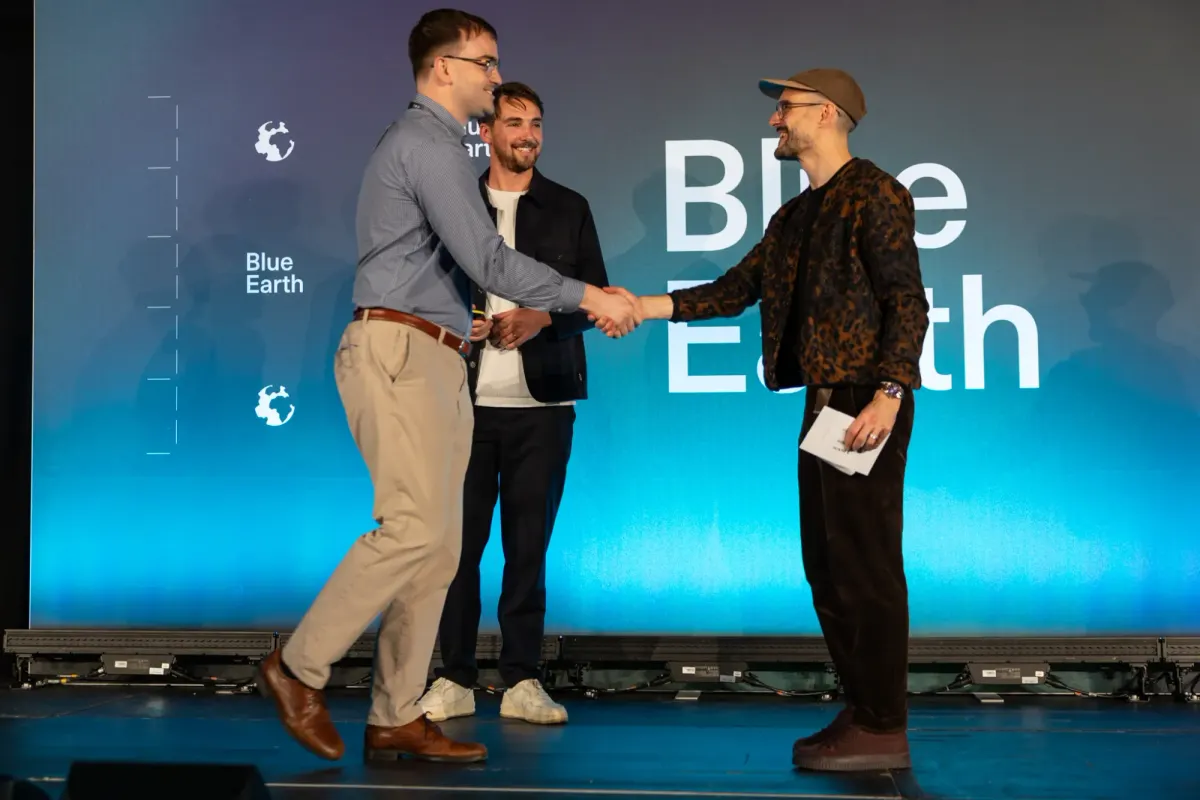
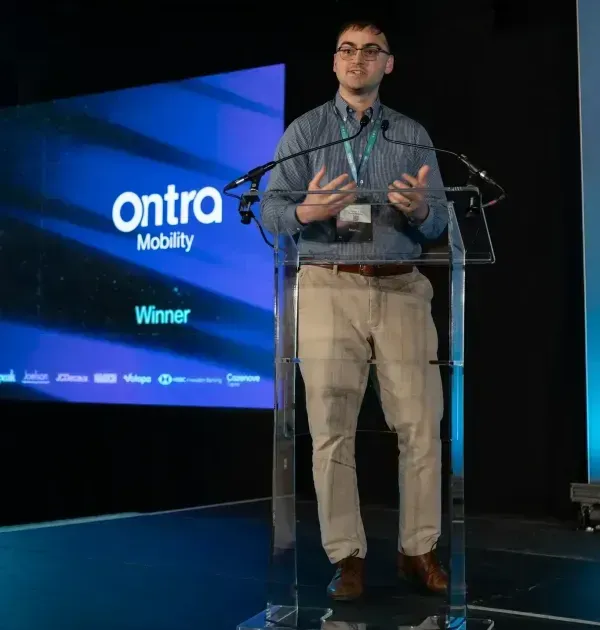
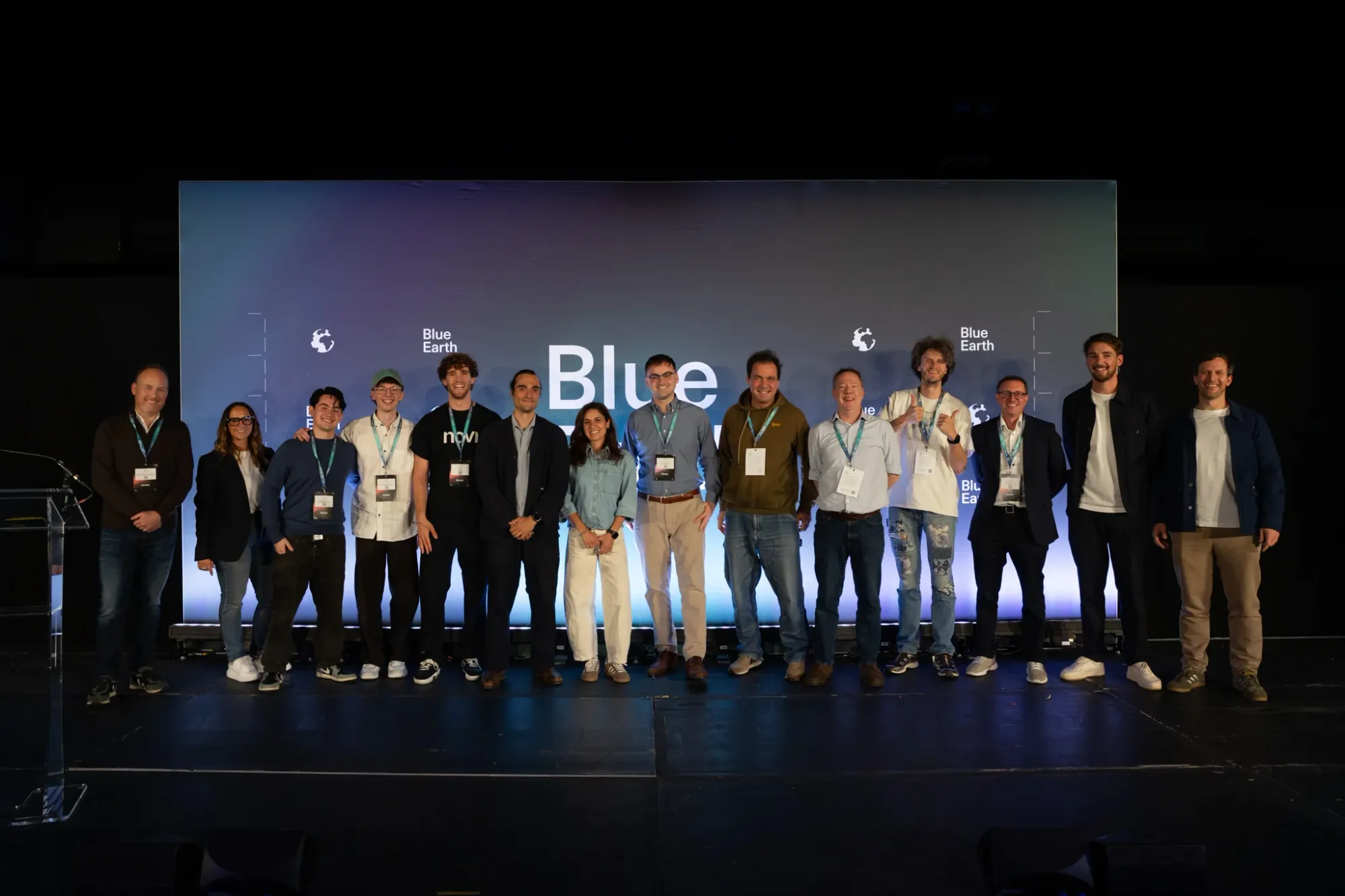
At the Blue Earth Summit in mid-October, Ontra was selected out of 1,400-plus applicants for a spot in the BE100. A successful pitch netted the top spot in the transport and mobility category, a nod that came with a £100,000 ($132,150) investment managed in partnership with U.K. venture fund Haatch. Blue Earth’s goal is to see the recognition and funding leveraged into further backing.
Global Atlanta caught up with Mr. Trasatti via email to learn more about Ontra’s origins in Atlanta, prospects for a return here and how the company planning out its own route for expansion based on its newfound publicity and capital. The interview was lightly edited for length.
Global Atlanta: What lessons learned from MARTA Reach were applied to the solution created through Ontra? What does this say about the importance of pilot projects and including students and PhDs in key urban/mobility design projects?
MARTA Reach taught us to build more operational reality into our models, like how drivers responded to requests. It also reinforced the importance of the whole journey, including waiting and transfers.
Those lessons now shape how we design Ontra’s platform around rider needs and agency constraints. That’s why I think collaboration with practitioners is so valuable. Researchers develop the methods and build software in collaboration with agency staff, learning from the people using it everyday. Those lessons feed back into the research.
You went to New York for obvious reasons, given your industry, but how do you envision interacting with Atlanta in the future, whether sourcing talent or providing solutions to the myriad transit agencies we have under various jurisdictions in our city.
Our connection to Georgia Tech and Atlanta has continued through the people we work with. Sam Baskin, our first employee, has been with us since our time in the lab. He created many of the animations for the MARTA Reach pilot and is now our designer at Ontra, helping shape how we present the company and explain our work. We’ve also been back to visit and stayed connected with our collaborators and current and former staff at Atlanta’s regional transit agencies. Those relationships helped us find our early customers.
We want to bring what we’ve learned through Ontra back to Georgia, helping MARTA and neighboring agencies plan their services together around the trips people need to make. The goal is to make trips across agency and county boundaries easier, with better connections and less waiting time for transfers. As we grow, we also want to recruit more people from Georgia Tech and the wider Atlanta region, and we hope to build a larger presence there over time.
How globally applicable is your predictive tool, and what are some of the factors that make it most appealing for transit agencies?
Ontra is an AI platform for transit planning. We help agencies decide what service to run with the resources they have. We’ve worked with systems as small as four routes and with agencies at New York City‘s scale. The details are different, but the underlying questions are familiar: where should service go, how often should it run, and how do you balance the needs of riders with the budget and vehicles available?
We have worked with agencies across the U.S. and internationally. We bring demand modeling, optimization and scenario analysis into one planning environment. That lets us recommend changes to routes, frequencies or on-demand zones, show their predicted effects, and give the agency something concrete to react to.
A planner can look at an option, add local knowledge, change a constraint, or decide that a different priority matters more, then explore what that changes. That back-and-forth is an important part of figuring out what the agency wants to achieve. The agency can explore more options, choose a plan it understands, and explain it to its community.
How transformative will this BE100 investment be? What will you be able to accomplish based on it?
BE100’s investment will help us make advanced transit planning tools accessible to agencies small and large for everyday service decisions. We want a planner to be able to describe a question in everyday language and have the platform help turn it into a rigorous planning experiment, using calibrated models and the agency’s operating constraints to develop and evaluate recommendations.
That’s the agentic transit planning platform we’re building toward. Blue Earth also brings community and publicity that can help us share our work and build relationships with more agencies and partners.