
These Georgia Teens Built An App To Show You How Much You Really Scroll

How much time are you really spending on your phone?
The average American spends well over four hours on their phone and looks at their screen over 200 times a day, according to Consumer Affairs. Young Georgia-based entrepreneur Pranshu Raithatha had a feeling individuals grossly underestimated their own screentime.
He started looking into the growing world of screen time monitoring solutions, and found the options out there lacking.
“Every solution I found focused on blocking apps, setting limits, or making people feel guilty. I wanted to build something different, something that helps people become aware of their habits first,” Raithatha told Hypepotamus.
So, he sat out to fix the problem. His solution? The app Mivo Scrolling.
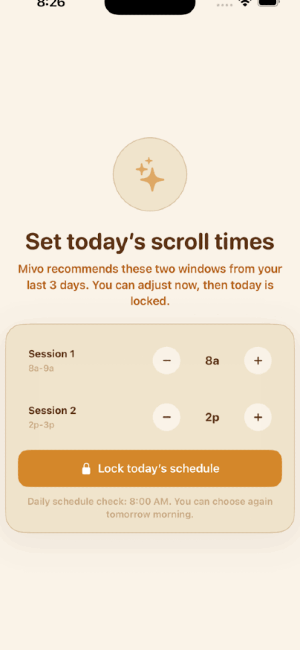
While other options block apps, send reminders, or gamify time away from a screen, Mivo starts by asking a person to estimate how much time they are spending scrolling each day.
“It helps them understand the gap between how much they think they scroll and how much they actually scroll. Instead of forcing discipline, Mivo builds self-awareness. We don’t tell people to stop scrolling, we help them make more intentional decisions,” Raithatha added. The app then helps users develop pattern awareness, and asks “why” a person is logging onto an app.
“I believe lasting behavior change starts with awareness, not restriction,” he told Hypepotamus. “The goal is to help people use technology consciously, not automatically.”


Raithatha built Mivo with his co-founder Harsh Mehta. The idea evolved over the last several months through “research, user feedback, and multiple iterations. Building the app itself took a few months, but much of the work happened before writing code: talking with students, understanding why existing solutions weren’t working, and refining the product until it addressed the real problem rather than just the symptom,” Raithatha added.
Raithatha, a high school student in Cumming, Georgia, said that one of the biggest lessons learned in deploying the Mivo app was that “the first idea is rarely the best one.”
“My original concept looked much more like a traditional screen time app. After talking to users, I realized people didn’t want more restrictions, they wanted a better understanding of their own habits. Being willing to listen and completely rethink the product ended up making Mivo much stronger,” he added.
The app is currently available for iOS users and Raithatha said he is working on building out the Android version.
“Long term, I’d love for Mivo to become the go-to app for helping people build healthier relationships with technology, not by limiting access, but by helping people become more intentional with how they spend their time.” He added that he sees a future career where he can solve “real-world problems through technology.”