
How Passport Built A Culture That Turned Employees Into Founders.
Passport’s most consequential product for Charlotte may not be parking software. It may be the people who learned inside the company how to build, finance, and scale technology businesses—and then took that knowledge into the region’s next generation of startups.

CHARLOTTE, July 27 (Hypepotamus) - You may know Passport without knowing its name, as its technology powers parking payments, permits, and enforcement systems in more than 800 cities across North America.
But within Charlotte’s technology community, the company is also known for something that does not appear on a traditional growth dashboard. That metric? The number of former employees who have gone on to build companies of their own.
At least 15 businesses have been started by Passport alumni, including venture-backed companies like StreetFair (acquired by Thumbtack), DebtBook, Subsalt, CivicEye, and Techstars portfolio company SkillPop, to name a few. Within the Charlotte ecosystem, those founders have earned the endearing nickname of the “Passport Mafia.”
Passport co-founder Khristian Gutierrez, who stepped into the CEO seat in 2024, attributes the company’s entrepreneurial pipeline to “transparencymaxxing,” which he said is the company’s culture of giving employees a close look at how a technology company is actually built, operated, and scaled.

PlayerZero is an AI production engineer that builds a living model of how your software actually works.
Building Passport
Passport started in 2010 by helping smaller parking operators introduce mobile payments. The founding team soon realized that payments represented only one piece of a much larger operational challenge.

“We started by partnering with smaller parking operators, helping them enable mobile payments. Almost immediately we saw that the harder and more interesting problem sat upstream: managing the entire facility,” Gutierrez told Hypepotamus. “Who has the right to park here, at what rate, under which rules, and what happens when somebody violates that right?”
That realization pushed Passport beyond its original payment application. The company began developing a full-stack platform that included back-office infrastructure, real-time compliance tools, payment processing, and front-end mobile and digital payment options.
“What was missing in the market was a platform focused on the needs of operators, which for us quickly became municipalities, cities, and counties, and the software tooling they needed to run their programs,” Gutierrez said. “There were genuinely exciting point solutions coming to market.”
Passport’s early growth depended on convincing government agencies to adopt new software. For Gutierrez, the clearest sign of product-market fit came when existing customers began recommending Passport to other cities.
“Government buyers are risk-averse by design. They are spending public money and they do not take chances,” he said. “They run very strict RFP processes, and early in our business, there weren’t off-the-shelf motions to purchase cloud-based payments and operations software.”
A city willing to provide a reference letter or publicly discuss its experience with Passport represented meaningful validation, Gutierrez added.
Scaling Passport To Over 800 Cities
Cities often begin talking with Passport because their parking enforcement systems rely on aging technology and manual processes, according to Gutierrez. Employees may spend significant portions of their workweeks pulling data, managing spreadsheets, and moving permits, appeals, or hearings through disconnected systems.
In Boston, Gutierrez said modernizing the city’s software stack reduced its weekly workload by 40%. Permits, appeals, and hearings now move approximately three times faster.
Once enforcement systems are being reconsidered, payment processing often becomes part of the same conversation.
“[Cities] want tooling that works, data they can trust, and a partner who’s still there after go-live,” Gutierrez said.

Passport has since grown from a mobile parking payment product into a profitable software company serving more than 800 cities across North America, with Gutierrez saying the company “passed the tipping point of scale a while back.” Its employee headcount has reached approximately 160 people.
Passport has raised more than $210 million since its founding, bringing on investors including Sixth Street, Alumni Ventures, Bain Capital Ventures, Relevance Ventures (formerly Relevance Capital), and Rho Capital Partners.
Inside The “Passport Mafia”
Gutierrez said the company has not treated headcount as its primary measure of progress.
“We stretch our people to do more with less, share knowledge across functions, and build this business together,” he said.
That approach has also helped produce Passport’s growing network of startup founders.
The “Passport Mafia” was not a formal program or a deliberate effort to turn employees into entrepreneurs. Instead, Gutierrez said it emerged from how the company assigned responsibility, shared information, and exposed employees to different parts of the business.
“It means we’ve taken business building to a place of transparencymaxxing,” he said. “Working at Passport, and going all in, means you can leave with the skill set to build your own business.”
Employees are asked to take ownership of meaningful problems, according to Gutierrez. That experience helps them develop the judgment required to make decisions under uncertainty.
“People own real problems before they feel ready, which is how you build judgment. They see the whole company (sales, product, implementation, finance, board-level realities), which is how you build pattern recognition. And we tell people the truth about the business, not the sanitized version. You can't build a company on vibes,” he added.
Gutierrez said company leaders encourage prospective founders to reach out for investment, advice, and introductions. Some of Passport’s own investors have subsequently backed companies started by its alumni.
“We say it in town halls: if you’re leaving to start something, call us,” he said. “We’ll invest, advise, and make introductions. It’s what a good company should produce.”
The result is a network of at least 15 alumni-founded businesses, with several others reportedly underway, according to Gutierrez.
“Capital follows trust, trust follows talent,” Gutierrez said.
 hypepotamus
How Charlotte Shaped Passport’s Growth
Building in Charlotte, a city known as a banking and finance hub, was an asset for Passport in the early days.
“[Charlotte] gave us people who already understood regulated money movement,” Gutierrez said. “We didn’t have to import that.”
The city’s startup funding environment was less developed when Passport launched, and many members of the founding team were not originally from the region.
As Passport and other local technology companies attracted outside investment, Gutierrez said those outcomes helped create credibility for the next group of Charlotte founders seeking capital.
“Every good outcome reprices the whole market,” he said. “One exit does more for the next ten Charlotte term sheets than any economic development campaign ever will.”
An exit is exactly what looks to be on Passport’s horizon.
In March of this year Arrive, a giant in parking and connected mobility services. (If the name sounds familiar, it is because Arrive’s portfolio also includes Atlanta-based ParkMobile.) The terms of the transaction will not be disclosed, according to press announcements made by Arrive.
Read More About Passport Over the Years
 Holly Beilin
 Mike Jordan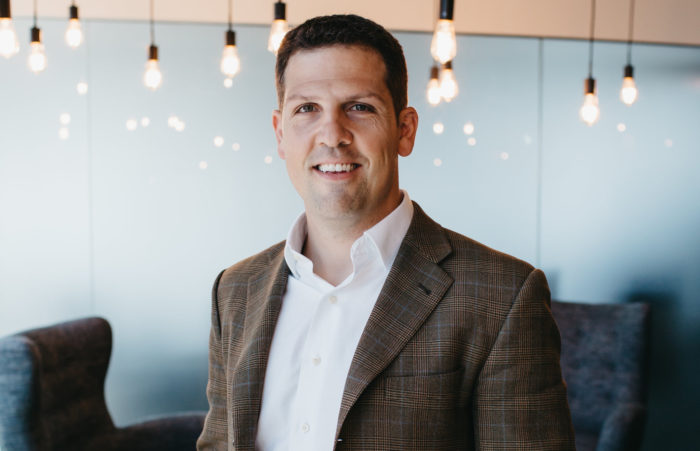
See more Hypepotamus stories in your search results