As Focus Turns To Physical AI, Georgia Sees An Opening
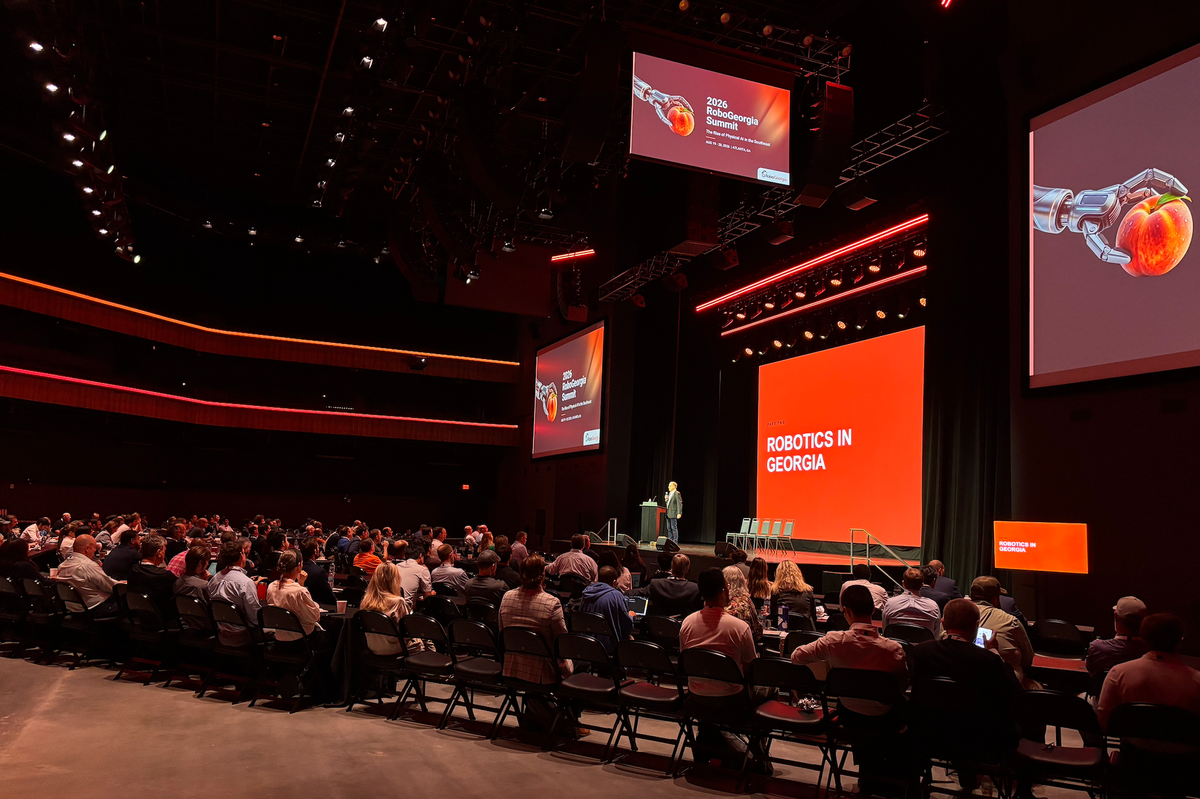
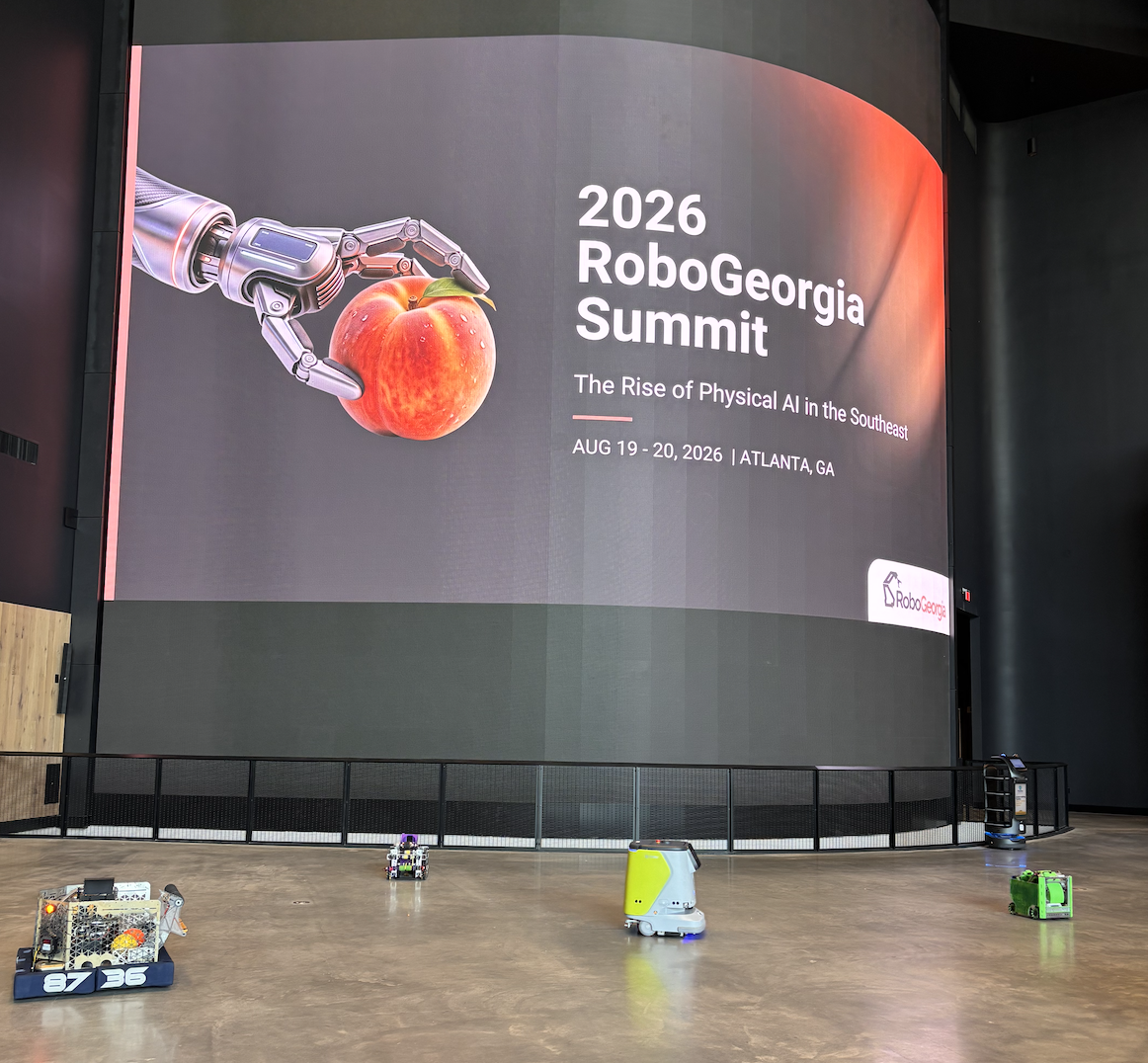
FAYETTEVILLE, GEORGIA, August 21 (Hypepotamus) - VC Bill Nussey kicked off the RoboGeorgia Summit, which took place in Fayetteville, Georgia this week, with a provocative question: When will we all have a robot at home folding our laundry?
Don’t hold your breath, says Nussey, a sentiment echoed by other robotics leaders in attendance.
Nussey, a partner at Atlanta-based Tech Square Ventures, thinks some of the biggest opportunities in robotics are much less flashy. Think robots moving materials around factory floors, picking items in warehouses, working alongside farmers, or taking on repetitive jobs inside industrial facilities.
In his words: “boring robots.”
Investors increasingly seem interested in the boring stuff, too.
After years of pouring capital into AI software, investors are turning more attention to physical AI (which includes robotics and autonomous systems). Physical AI startups raised $47.4 billion across 521 deals in the first half of 2026, per Crunchbase. That’s up 80% from the same time period last year.
While that numbers includes flashy, consumer-facing robotics companies like Waymo, it also includes investments into less glamorous companies tackling real-world industrial problems.
Georgia robotics companies have captured only a small share of that venture capital so far. But the message coming out of RoboGeorgia was that the state may have something more important. The state is already home to the industries, infrastructure, and real-world environments where physical AI companies can actually build, test, and deploy their technology.

Make every text, call, and lead count. CallRail connects the dots between your campaigns, conversations, and customers.
Georgia’s Robotics Geography
Robotics has to work in the physical world. That means it matters where a robotics company builds, tests and deploys its technology.
A robot designed for a warehouse has to navigate the realities of that warehouse. An agricultural robot has to work across actual farmland. A manufacturing robot has to function safely alongside workers and equipment on a factory floor.
“It makes geography matter for the first time, and I believe that Georgia has the best geography in the world [for robotics],” Nussey said during his RoboGeorgia keynote.
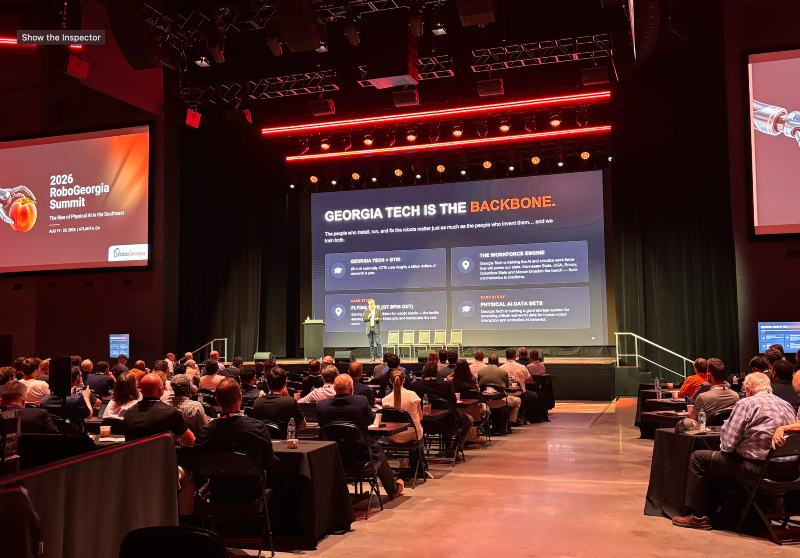
Georgia gives robotics companies access to a particularly wide range of real-world environments. The state has a massive agricultural industry, one of the country’s busiest ports, the world’s busiest airport, a growing advanced manufacturing base, and a significant logistics and distribution footprint. It also has a high concentration of Fortune 500 companies, including leaders in logistics, retail, hospitality, transportation — all potential customers for robotics companies.
 Maija Ehlinger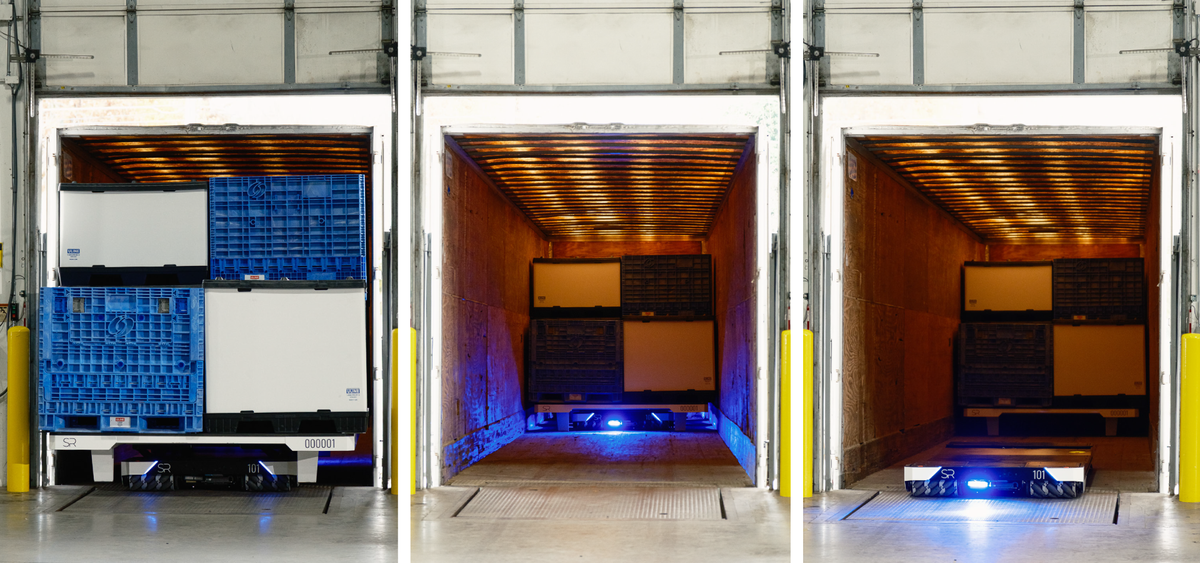
There are signs that geography is already working in Georgia’s favor.
International robotics companies have increasingly chosen the state as a foothold in the US market through Georgia. French warehouse unicorn Exotec established its North American headquarters in Atlanta, while companies like Poland-based Nomagic, Switzerland-based ABB Robotics, and China-based Hai Robotics, have also expanded their presence in the state.
And there are some ambitious physical AI projects already taking shape in the state.
Hyundai plans to begin deploying humanoid robots at its Georgia plant in 2028, initially for parts-sequencing work before potentially expanding the robots into more complex manufacturing processes.
Meanwhile, Georgia Tech recently opened its Advanced Manufacturing Pilot Facility in West Midtown Atlanta, which the university describes as the country’s first university-based “self-driving” manufacturing lab. The facility combines robotics and AI to automate manufacturing processes and give researchers and companies a place to develop and test new technologies at scale.
For Nussey, that mix of industries creates an advantage that is difficult to replicate.
“If you're a robotics company, you can come to Georgia, and you have the chance to put your technology across multiple industries,” he said.
The Hard Part: Getting Robots Into The Real World
RoboGeorgia brought startups together to showcase new technologies. On stage at the conference, the conversations largely focused on the harder question of what it takes to move a robot from a demonstration into an actual workplace.
The reality is that talent remains a big challenge. So does the overall cost of deploying robotics.
Another hurdle? The risk associated with bringing robotics to life inside a company.
In the SaaS world, testing might mean giving a small group of employees access to a new platform. Testing robotics can mean putting expensive, still-evolving hardware directly onto an active factory floor, warehouse, or other mission-critical environment. That creates a difficult question for both startups and their potential customers.
Nywaniyma Dike, who leads Emerging Process Technologies at The Coca-Cola Company, summed up the challenge while on a panel at RoboGeorgia. “Who's going to pay for it? Who's going to test it? When is it going to be tested?” pointing to the commercialization problem underpinning robotics companies trying to sell into enterprise companies.
That makes access to pilot facilities, manufacturing environments and corporate partners particularly important…and brings the conversation back to Georgia’s potential advantage.
Is Georgia A Robotics Hub?
Georgia already has homegrown robotics companies at different stages of growth, from established automation players like GreyOrange to newer startups like Slip Robotics, RIF Robotics, and R2 Labs.
It has global robotics companies planting flags in the state. It has major corporations that could become customers. It has universities producing talent. And, perhaps most importantly, it has farms, factories, warehouses and logistics networks where robots can actually be put to work. Walking around RoboGeorgia made clear that many of the pieces are already here. So the question is: Will the capital follow?
See more Hypepotamus stories in your search results