Atlanta’s Ode Social Takes Aim at the Hardest Part of Hanging Out: Making It Happen
ATLANTA, October 4 (Hypepotamus) - Aditi Sharma never had a shortage of people who wanted to go and do activities with her — be it a grocery run, catching a film, or going on a hike — while she was a college student at Georgia Tech.
What she did have a problem with was getting everyone to agree on a plan.
“Desire is not the constraint; follow-through is,” she told Hypepotamus. “I am spontaneous by nature, and the people I would have wanted to do something with were rarely free at the moment I was.”
Those scheduling conflicts left Sharma with a startup idea that has grown into the “IRL” social app Ode Social.

PlayerZero is an AI production engineer that builds a living model of how your software actually works.
How Ode Social Works
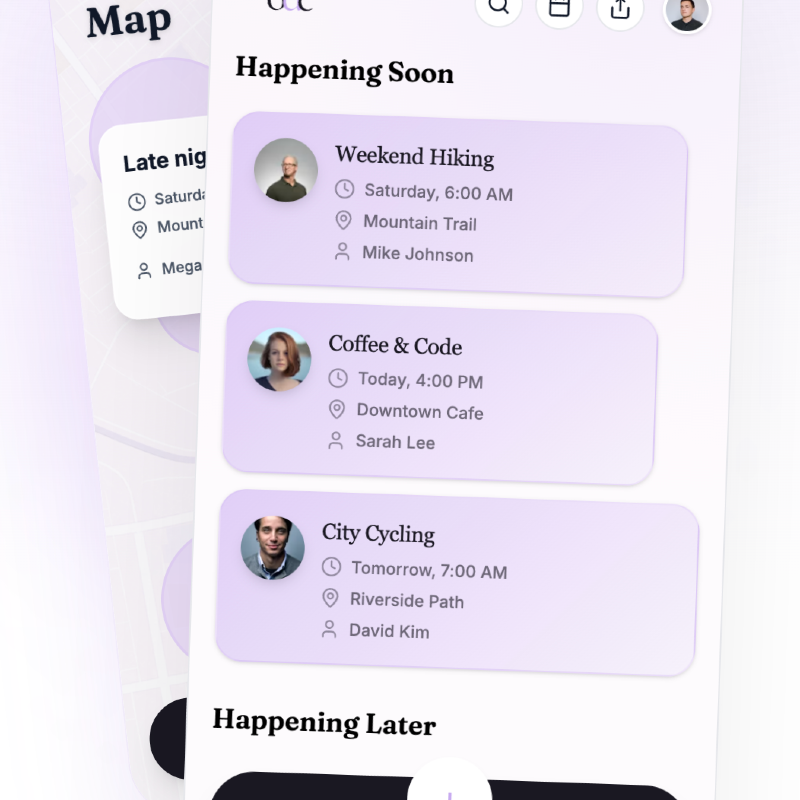
Ode Social works by connecting people nearby based on activities they want to do. Someone might post that they want to go on a group bike ride or check out a new coffee shop, then the app surfaces people close by who might be interested in joining.
Ode’s website and mobile app are available across geographies. But, like any hyperlocal, match-based platform, density of users makes a huge difference.
“So we are concentrating on a single community rather than spreading thinly across many. That community is Atlanta, and specifically Georgia Tech,” Sharma told Hypepotamus. “I completed my CS degree there, so I know the campus and the people in it. It offers precisely the conditions this product requires: a large student population within a walkable radius, overlapping free time, and enough people that at almost any hour someone is free to do the thing you have just posted.”
For Sharma, it is about following a playbook that has worked for other connection-based platforms.
“Facebook grew this way for good reason - campus by campus, saturating each school before opening the next, so that every new campus arrived with demand already built rather than an empty feed. I treat density the same way: as a precondition rather than a metric. The aim is not to be present in as many places as possible, but to be genuinely usable in one,” she added.
It is also about fixing a well-known flaw when it comes to aligning people’s calendars.
 Maija Ehlinger
“Tonietto and Malkoc (Journal of Marketing Research, 2016) ran thirteen studies on what they term the calendar mindset: once a leisure activity is fixed to a date and time, it begins to feel structured and work-like, and both the anticipation and the enjoyment decline. The more useful half of their finding is the remedy - the effect disappears when plans remain loosely scheduled. That is the design principle behind ode. It matches on availability rather than asking people to schedule around it, so what you post is an intention rather than an appointment,” Sharma added. “To establish whether this was my problem or a general one, I ran a fourteen-day daily diary study: 211 check-ins between 13 and 27 June 2026, roughly fourteen per day. The instrument was deliberately neutral. It made no mention of ode, of connection, or of company, so any social signal had to be volunteered. Each day participants recorded what they did with their free time, anything they wanted to do but did not, what stopped them in their own words, a fixed checklist of blockers, and how much the miss bothered them.”
Meet The CEO
On top of building and running Ode Social, Sharma is the CEO of Four Vectors, a robotics engineering startup.
For Ode Social, Sharma has largely bootstrapped the app, but did take on a $5,000 SAFE note from the CREATE-X accelerator program.
 Maija Ehlinger
“Going from undergraduate to running a company has taught me a great deal, but the learning that actually changed the product came from the research,” she added. “Ohio State's 2025 study found that 43% of their students screened as lonely. Within that same population, 90% reported having relationships with other students and 89% said they felt part of the campus community. Nationally, close to half of all undergraduates screen positive. These are not people without friends. They are people whose friends are never free at the same time they are.”
She said such studies reframed what she understood Ode Social to be about. “I am not building a friendship app, and I am not trying to introduce people to more people - most students already have enough people. What is missing is a layer for availability: who is free now, and what they are willing to do,” Sharma added. “Loneliness on a campus this dense is not a shortage of people. It is a shortage of overlap.”
See more Hypepotamus stories in your search results