Venture Atlanta 2026 Preview: What Investors Want From Founders This Year
ATLANTA, October 9 (Hypepotamus) - Venture Atlanta returns next week with close to 100 selected companies and two days of programming built around connecting founders with the people who can help their businesses grow.
Now in its 19th year, the conference runs October 14–15 at Midtown’s Woodruff Arts Center. Alumni companies have raised more than $8.8 billion, according to organizers. This year’s lineup spans enterprise software, fintech, healthcare, robotics, defense technology, and more.
For attendees, the challenge is deciding where to spend their time…and making sure conversations count.
What To Expect From Venture Atlanta
Venture Atlanta’s main events run on Wednesday and Thursday. For runners, Wednesday starts early, with a Founder Funder Jog in Piedmont Park before breakfast and opening remarks at 11 a.m.
The keynote is a conversation between Cosm CEO Jeb Terry and Andrew Davis, Cox Enterprises’ senior vice president of investments and managing partner of Socium Ventures. Other sessions explore rural healthcare innovation, growth-stage lessons, preparing for an exit, and lessons from Cardlytics co-founder Lynne Laube’s move from founder to venture investor.

Make every text, call, and lead count. CallRail connects the dots between your campaigns, conversations, and customers.
One of the key parts of Venture Atlanta includes the pitches for Startup Showcase Live, which will hand out a $475,000 investment prize.
Attendees should check the full schedule for access requirements (as some sessions require an RSVP or are limited to specific audiences).
What To Connect With Investors?
Now, founders come to conferences like Venture Atlanta specifically to get connected to check writers.
Investors we talked to ahead of Venture Atlanta told us that time is limited…so get ready to get to the point.
Richard Fraim, a partner at Knoll Ventures, wants to understand five things quickly: the product, its customers and their return on investment, the team’s advantage, the company’s defensibility, and signs of early commercial traction.
“Rather than delivering a full pitch, the goal should be getting a follow-up meeting on the calendar where they can provide a much more in-depth walkthrough of the business and vision,” Fraim told Hypepotamus.
Evidence matters, too. Fraim looks for paid pilots converting into full contracts, growing product usage, and measurable customer value. A few substantial contracts can be more compelling than a long list of small ones.
 Maija Ehlinger
Joe Mancini, co-founder and general partner at Front Porch Venture Partners, recommends opening with whether you are raising capital, then explaining what would help the business over the next six months.
“Start with the Bottom Line Up Front — specifically, are you raising or not (be direct and don't be shy!),” Mancini added. “We will do a much deeper dive with founders as a follow-up before we invest, so these conference convos are best focused on a quick personal connection so that we know each other and get tactical detail on the business and any upcoming fundraising plans. A solid but relatively quick personal connection (we are running to meet 100s of companies!) and then thoughtful bullet points that we can remember will keep you top of mind for a follow-up after Venture Atlanta with us.”
In general, when it comes to looking at early-stage customers, Mancini wants to see customers who have had an opportunity to cancel and chosen to stay. For software companies, he typically looks for roughly $200,000 in annual revenue and around 10 customers, while noting that expectations differ beyond software.
 hypepotamus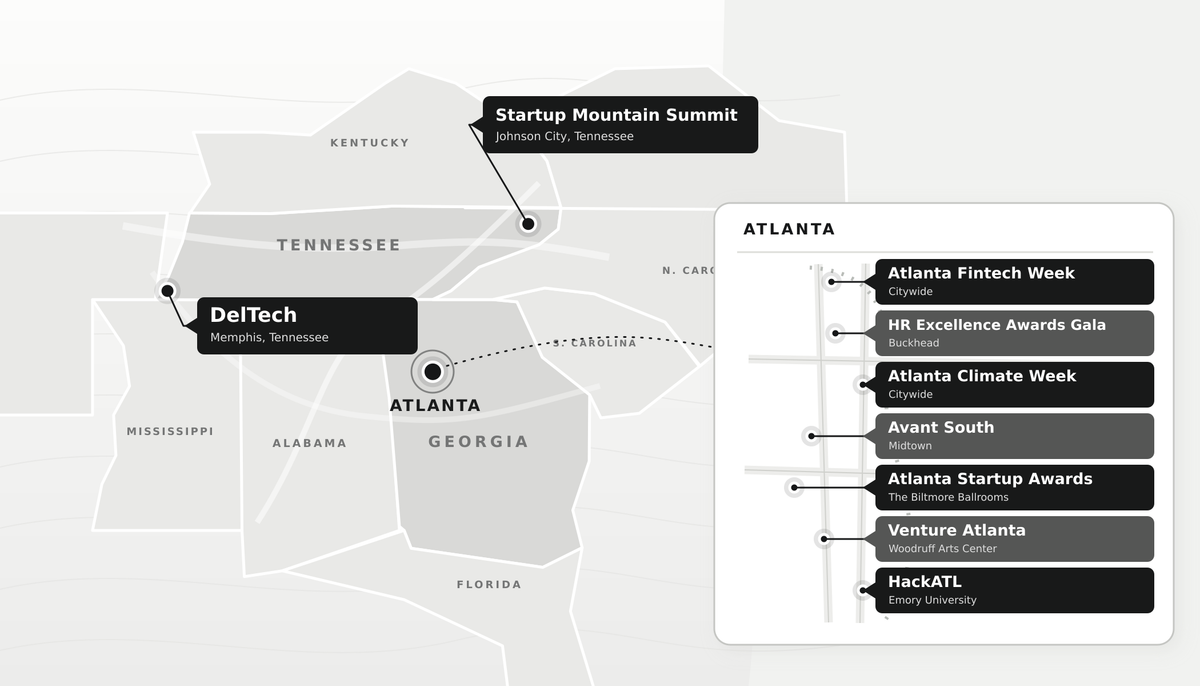
What Are Investor Red Flags Right Now?
But there are certainly a lot of “red flags” that concern investors.
Both investors we talked to warned against weak AI narratives. Fraim expects founders to understand their technology stack, inference costs, and how advancing models could affect their strategy.
“Traction has always been important, but in the AI era we’re seeing many startups land significantly larger ACVs earlier in their lives, compared to prior vintages. AI products are increasingly “doing the work” instead of just facilitating the work, which means these products can be sold against labor and services (human capital) budgets, rather than solely against traditional software budgets,” Fraim added. “A smaller number of customers paying substantial ACVs, with clearly quantifiable ROI, can be more interesting to us than a long list of small contracts.”
Mancini cautioned against using Palantir’s engineering model to justify staffing around an immature product.
“We are not opposed to tech-enabled services businesses and do believe that humans will be required to implement AI platforms effectively, but too many founders right now are taking that teeny-tiny opening and the narrative from Palantir and stretching it into justifying a bunch of people to paper over an immature product with low gross margins. We'd rather see a thoughtful product roadmap and product-led growth wherever possible,” Mancini added.
See more Hypepotamus stories in your search results