Atlanta Startup Botsi Raises Pre-Seed To Personalize Subscription Pricing With AI

ATLANTA, September 9 (Hypepotamus) - So, you have a business that relies on subscriptions. How do you determine what that subscription amount should be?
Atlanta entrepreneur Jason Schubert said that traditionally, pricing decisions are made with a “combination of intuition, competitive research and A/B testing.” And the price they land on typically gets rolled out to everyone.
“The problem is that the process optimizes for the average user or assumes the first arbitrarily chosen price is the best just because it works well enough,” Schubert added. “You may have one user who gets tremendous value from a product and would happily pay more, and another who likes the product but won’t convert at the standard price. A traditional A/B test forces you to pick one price for both of those very different users.”
That pricing problem is what Schubert and the team at Botsi is solving for. The AI pricing platform for consumer apps, which launched last year, is being built by seasoned startup founders…and now has the backing of VCs.

Tech Square Ventures is an Atlanta-based firm investing in enterprise (B2B) and marketplace technology companies.
Key Takeaways
- Atlanta-based Botsi uses AI to personalize subscription prices and paywall offers for consumer apps.
- The platform replaces manual pricing A/B tests with continuous optimization using options approved by each business.
- Botsi raised a pre-seed round to expand its machine-learning, engineering and go-to-market efforts.
How Botsi Works
Botsi replaces manual A/B testing around pricing with ongoing AI optimization.
Rather than focusing on a single “perfect” price, Botsi personalizes offers for the real people that are potential customers. That means a company can offer multiple prices and paywall options, which can help convert more users.
“Botsi isn’t inventing arbitrary prices for individual people," Schubert explained. While Botsi surfaces options that could help with subscription conversion, the "business remains in control of the range,” Schubert explained.
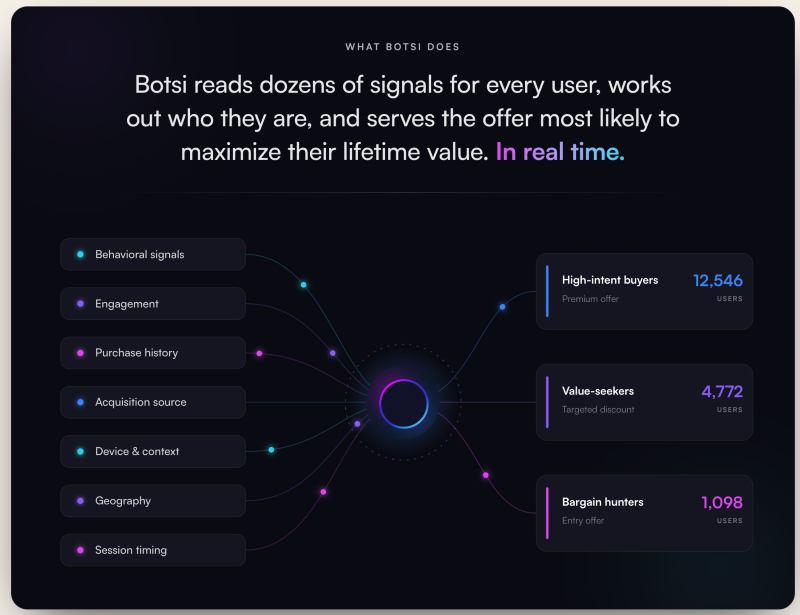
“Ultimately, our view is that personalization actually makes products more accessible. The alternative today is often that a company finds the highest single price that maximizes revenue across its entire population... and everyone who can’t justify that price or can't afford that price simply doesn’t become a customer. And because of companies' bias towards higher-cost products, that abandoned customer doesn't get the same ability to use products that someone with more wealth can use.”
Early Botsi adopters include Fitness AI, Sleepiest, and a handful of other companies.
A common theme is that customers “knew different types of users behaved differently, but their existing monetization setup still treated those users largely the same way,” Schubert added.
Meet The Team
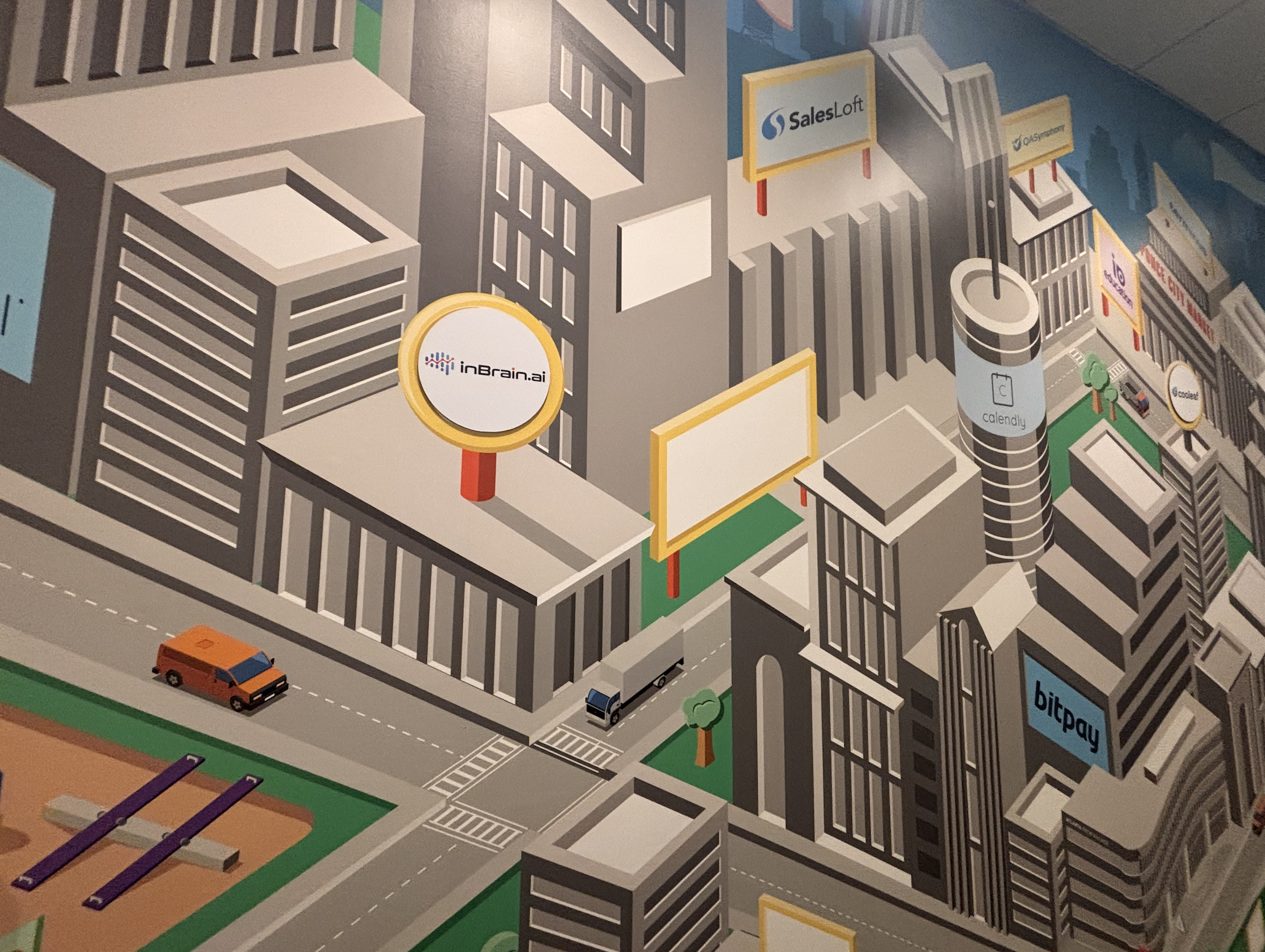
Jason Schubert already has a startup imprinted on the wall of Atlanta Tech Village - Buckhead. He was the CEO of the survey monetization platform inBrain.ai, which was acquired in 2021. The startup scaled and bootstrapped over the course of 7 years.
“By 2021, we had reached a point where the question became less about whether we could continue growing independently and more about what platform could help us accelerate what we’d already built,” Schubert said about the inBrain acquisition by the company Dynata.
“Dynata was a strong, strategic fit. They had enormous scale, premium survey demand and deep relationships across the research industry; we had built technology and a mobile-first consumer network that could make those surveys accessible to a much larger group of people. Putting the two businesses together gave us capabilities neither company had independently. So we didn’t view the acquisition as, “We’ve taken this as far as we can.” It was almost the opposite. We thought combining with Dynata gave the product and team an opportunity to become much larger than what we could build alone.”

Schubert said there are some big lessons he is carrying from inBrain into Botsi.
“One of the biggest lessons was that distribution is just as important as product. You can build great technology - and Botsi has a powerhouse of a product, but you still have to figure out how to get it in front of customers and users at scale. You can have the greatest product in the world, but nobody will use it if they don't know about it. And right now we're ready to tell more people about Botsi,” said Schubert.
The second lesson? The importance of staying close to the actual customer’s problem.
“Companies can very easily start building based on what competitors are doing or what sounds exciting internally. Some of our biggest opportunities came from listening to customers, identifying something painful or inefficient and then building a much better way to solve it.”
With Botsi, Schubert is building alongside co-founders Jacob Rushfinn, William Schubert (fellow co-founder of inBrain), as well as CTO Joshua Jarvis and Lead ML Engineer Jordan Nafa.
New Funding For Botsi
The Botsi team just announced it has raised a $1.5 million pre-seed round. Investors in the round include Pennsylvania-based Plain Sight Capital, San Francisco-based Telegraph Hill, and several angels.
“We initially set out to raise around $1.5 million and ultimately oversubscribed. We already knew how to build a company efficiently, so this wasn’t about needing capital to figure out whether there was a business here. It was about accelerating something we were already seeing work and investing more aggressively in machine learning, engineering and go-to-market,” Schubert explained to Hypepotamus. “We were also selective about who we wanted around the table. At this stage, a great investor can contribute much more than capital. We wanted people who understood what we’re building, believed in the market and could help us compound the advantages we already had.”
Featured photo from Botsi's X account
See more Hypepotamus stories in your search results